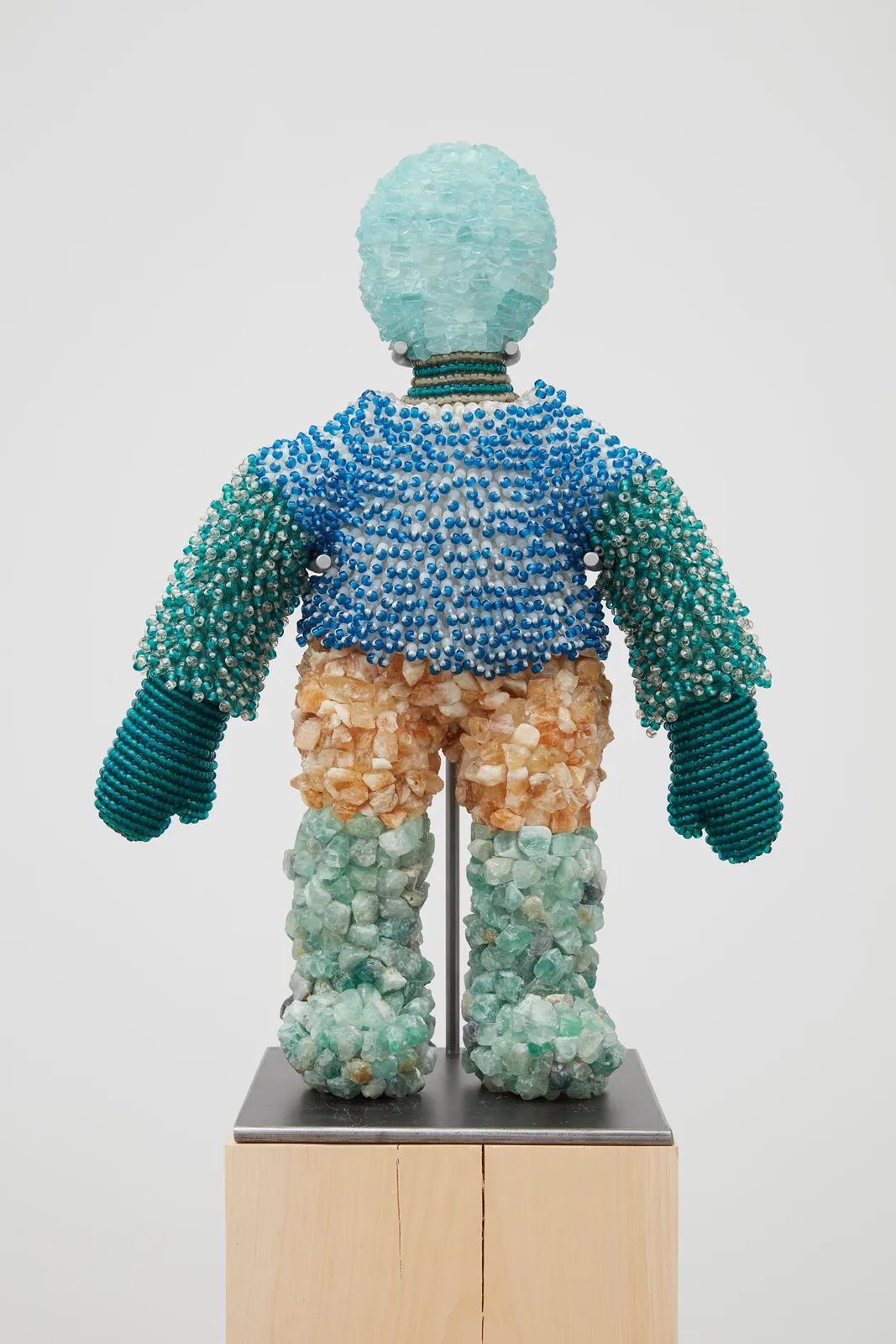
Jeffrey Gibson American, member of the Mississippi Band of Choctaw Indians and Cherokee, born 1972
okchakko hicha okchamali hicha lakna, 2020
Acrylic Felt, Glass Beads, Artificial Sinew, Citrine, Florite, Aquamarine Glass Stones, Steel Rod, Nylon Thread, Polyester Fiber Fill, Steel Support, Wood Base
32 x 23 x 13 1/2 inches (81.3 x 58.4 x 34.3 cm)
75 x 23 x 13 1/2 inches (190.5 x 58.4 x 34.3 cm) overall with base
75 x 23 x 13 1/2 inches (190.5 x 58.4 x 34.3 cm) overall with base
Jeffrey Gibson's three-dimensional figures were inspired by a wide range of cultural and art historical references, from storyteller dolls and China’s Terracotta Warriors to the cloth figures of Louis Bourgeois;...
Jeffrey Gibson's three-dimensional figures were inspired by a wide range of cultural and art historical references, from storyteller dolls and China’s Terracotta Warriors to the cloth figures of Louis Bourgeois; he envisioned them to be alien-like, a subtle nod to the trope of vague ethnic references seen on invading species in popular Sci-Fi movies. Additional research in American psychedelic culture and Afro-Futurists guided Gibson’s strategy in creating the final works in the vein of his futuristic Native Aesthetic.
“The figures began as a way for me to create a space for myself, one that I did not see represented in dialogues about Native or Indigenous representation. The perceptions placed on to me by non-Native people were too narrow and never acknowledged my experiences as “Native” enough. I refute this kind of pigeonholing by defining my own sense of aesthetics and use of materials that are a mash up of personal experiences and references that have occurred in my life."
"I have always appreciated that this celebration of the individual countered the static public perception of Native people. I never fit that perception and found it frustrating to be considered 'not Native enough.' I moved on.”
- Jeffrey Gibson, 2020
“The figures began as a way for me to create a space for myself, one that I did not see represented in dialogues about Native or Indigenous representation. The perceptions placed on to me by non-Native people were too narrow and never acknowledged my experiences as “Native” enough. I refute this kind of pigeonholing by defining my own sense of aesthetics and use of materials that are a mash up of personal experiences and references that have occurred in my life."
"I have always appreciated that this celebration of the individual countered the static public perception of Native people. I never fit that perception and found it frustrating to be considered 'not Native enough.' I moved on.”
- Jeffrey Gibson, 2020