-
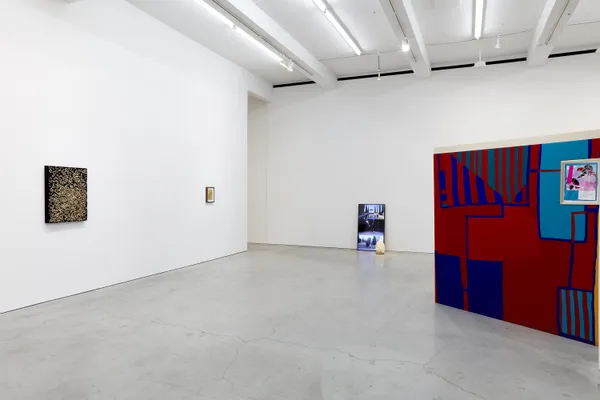
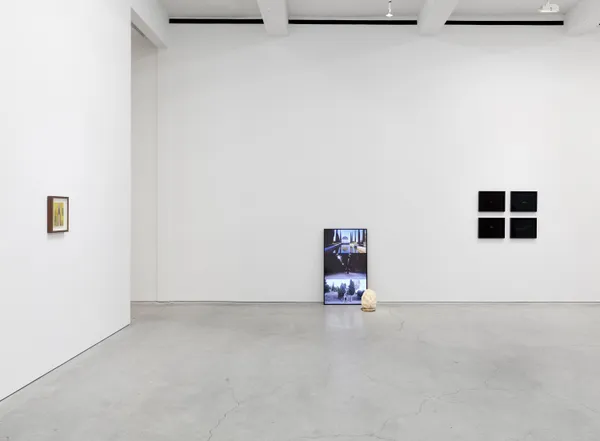
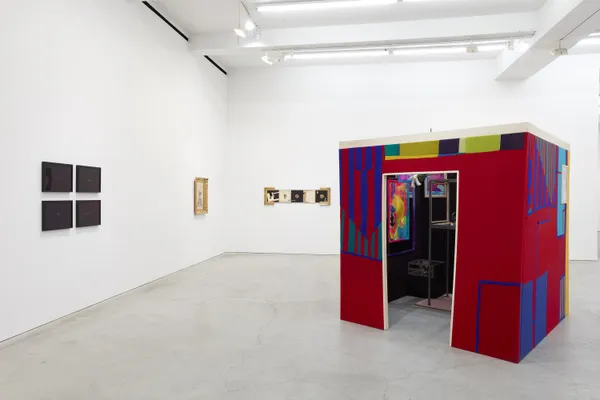
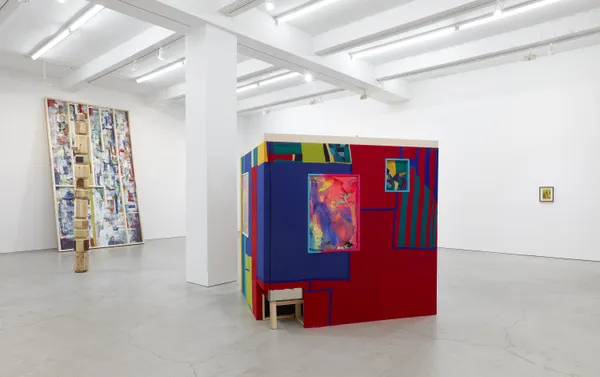
Installation shots
-
Overview
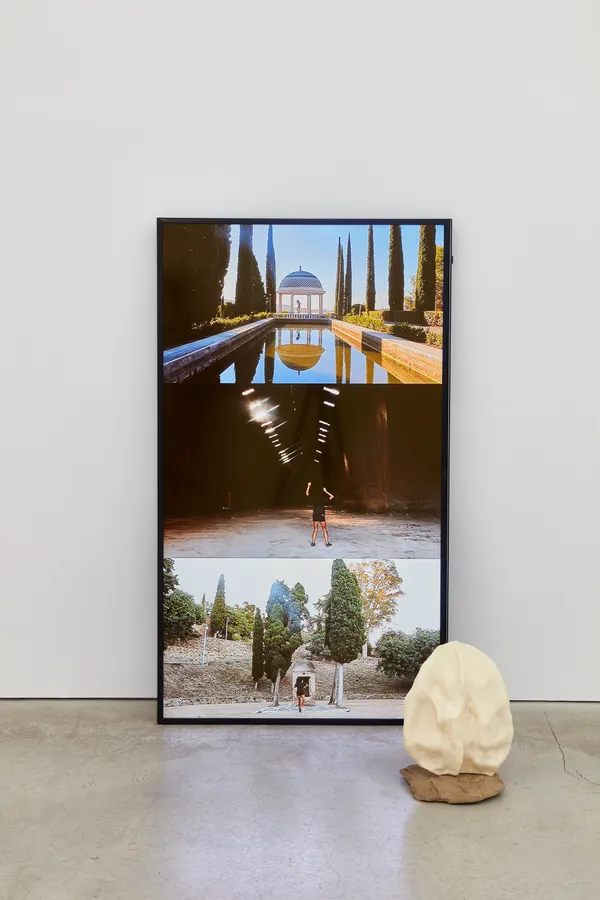
 Rashawn GriffinTo bring love/terrible things, 2004Video (color, audio)2 minutes 48 secondsEdition of 5 +1 AP
“A constant improvisation in time” — Amiri Baraka (Blues People)
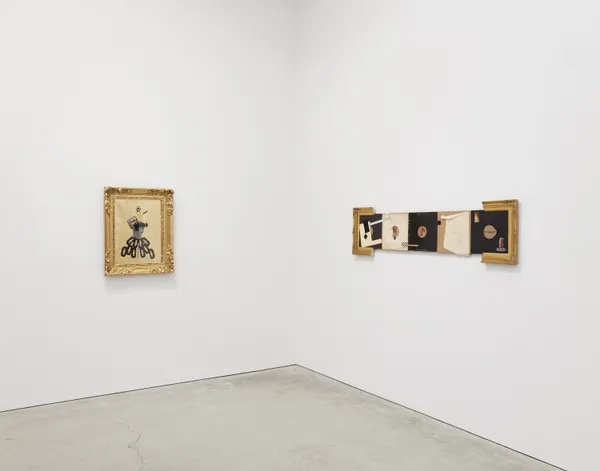
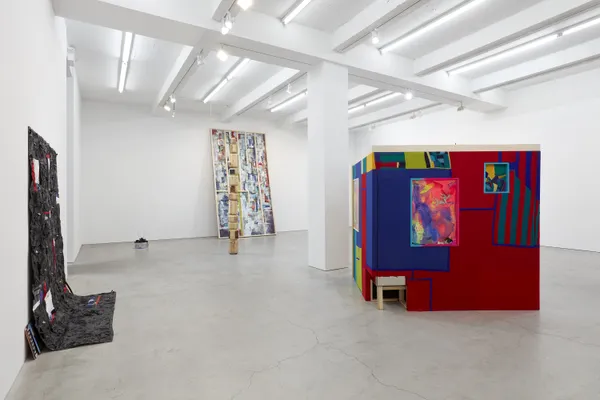
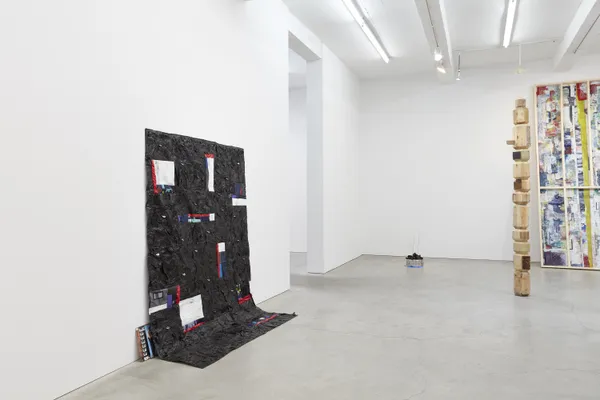
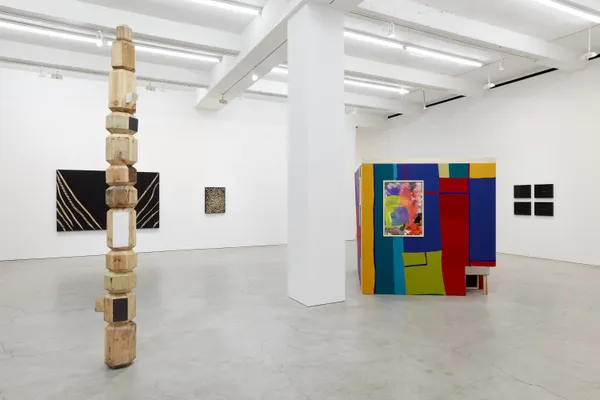
Sikkema Jenkins & Co. is pleased to present Post Hip Hop?: or return of the Boom Bap!, a group exhibition curated by interdisciplinary cultural practitioner, william córdova.
Participating artists include, Yanira Collado, Nathaniel Donnett, André Leon Gray, Sofía Córdova, N. Masani Landfair, Rashawn Griffin, Luis Gispert, Onajide Shabaka, and Lee Quiñones. Encompassing a diverse range of mediums and presentations, Post Hip Hop?: or return of the Boom Bap! centers around the onomatopoeic characteristics inherent to these artists’ work and the threads of sonic-visual dialogue created when exhibited collectively. Curator william córdova seeks to explore how their respective practices are shaped and informed by rhythm, syncopation, harmonic proportions, and the metaphysical concepts of musica universalis.
Polyrhythmic tones and patterns relate artist Yanira Collado and Nathaniel Donnett’s mathematical systems of improvisation to Jazz, Tango, and Merengue, all at once. Visual practitioner André Leon Gray and Sofía Córdova’s structures allude to altruistic frequencies that echo the ripples of Bomba and Salsa music. The oeuvres of visual artists N. Masani Landfair and Rashawn Griffin culminate with freestyle tones of stuttering narrative bits, analogous to the boom bap found in Nicolas Guillen’s cadenced poem, Sensemayá. Luis Gispert, Onajide Shabka, and Lee Quiñones offer more euphonic treaties akin to the Guaguancó. Echoing the clave pattern of the Cuban rumba, their works alter perceptions of the spatial and temporal with intentional modulations that strain, cascade, and reverberate. all at once the early 90s return of the boom bap!
“Cumanana cumanana, cumanana cumanana” — Victoria Santa Cruz (Cumanana)
Yanira Collado (born Brooklyn, New York) is interested in the visual language of information and the processes through which it is recorded, archived, and retrieved. Her work integrates found and reclaimed materials to evoke new perceptions of geographical histories and systems of social economies. Collado has participated in residencies at Artpace, San Antonio, Texas (2022); Oolite Arts, South Beach, Florida (2019-22); and Joan Mitchell Center, New Orleans, Louisiana (2020, 2022). Her most recent solo exhibition, Areíto/Allusions of Sacred Geometry and Diaspora was presented at the Noyes Cultural Art Center, Evanston, Illinois, in 2022. She has been the recipient of awards including the South Florida Cultural Consortium Fellowship (2021), Ellie Creator Grant (2019), and a Joan Mitchell Foundation Fellowship (2018). Her work is in the public collections of Pérez Art Museum Miami, Florida, and El Museo del Barrio, New York. Collado lives and works in Miami, Florida.
Sofía Córdova (born Carolina, Puerto Rico) works in mediums including performance, video, sound, music, and installation. Her practice considers the potential of speculative histories and the liberatory dimensions of performance within an interconnected matrix of class, gender, sexuality, colonialism, and systems of late-stage capitalism. Córdova received her BFA in Photography from St. John’s University, Queens, New York, (2005), and her MFA from California College of the Arts, San Francisco, California (2010). Her work has been exhibited and performed internationally at institutions including the Whitney Museum of American Art, New York; San Francisco Museum of Modern Art, California; Berkeley Art Museum and Pacific Film Archive, Berkeley, California; San Jose Museum of Art, San Jose, California; Tufts University Galleries, Medford, Massachusetts; and MEWO Kunsthalle, Memmingen, Germany. Córdova has been awarded residencies at Eyebeam, New York; Headlands Center for the Arts, Sausalito, California; Mills College Museum, Oakland, California; and the ASU Museum, Phoenix, Arizona. She lives and works in Oakland, California.
Nathaniel Donnett’s interdisciplinary practice shapes and holds open spaces of phenomenological and metaphysical significance. Utilizing sourced and reclaimed objects, Donnett approaches ideas of materiality through Black aesthetic traditions and strategies of lived experiences. Donnett (born Houston, Texas) received his BA in Fine Arts from Texas Southern University and his MFA from Yale University School of Art. He is the recipient of the 2022 John Simon Guggenheim Fellowship and a Deans Critical Practice Research Grant and Art and Social Justice Initiative Grant, both from Yale (2020). His work has been exhibited at the Crystal Bridges Museum of American Art, Bentonville, Arkansas; the Virginia Museum of Fine Art, Richmond, Virginia; Project Row Houses, Houston, Texas; The Virginia Museum of Contemporary Art, Virginia Beach, Virginia; The American Museum, Washington D.C.; The University Museum, Houston, Texass; The Kemper Contemporary Arts Museum, Kansas City, Missouri; Contemporary Arts Museum Houston, Texas; and the New Museum, New York.
Luis Gispert (born Jersey City, New Jersey) makes paintings, sculptures, and video work that comment on cultural stereotypes and the fetishization of value in contemporary American society. Psycho-geographical narratives under late capitalism are a throughline within his practice, manifesting in composites of familiar imagery and unexpected aesthetics. Gispert studied at the School of the Art Institute of Chicago and received his MFA from Yale University (2001). Notable solo exhibitions include shows at the Museum of Contemporary Art, North Miami, Florida; Artpace, San Antonio, Texas; Hood Museum of Art, Dartmouth College, Hanover, New Hampshire; and the Berkeley Art Museum and Pacific Film Archive, Berkeley, California. His work can be found in the public collections of the Whitney Museum of American Art, New York; Museum of Modern Art, New York; Solomon R. Guggenheim Museum, New York; San Francisco Museum of Modern Art, California; San Diego Museum of Art, California; and the Pérez Art Museum Miami, Florida. He lives and works in Brooklyn, New York.
André Leon Gray (born Raleigh, North Carolina) is a multi-disciplinary self-trained artist interested in power structures, social hierarchies, and the synthesis of history and culture, past and present. His work utilizes collage, assemblage, painting, drawing, and photography to code multiple layers of pictorial meaning and material relationships. Gray’s work is in the permanent collections of the North Carolina Museum of Art, Raleigh, North Carolina; the California African American Museum, Los Angeles, California; and the Gregg Museum of Art & Design, NC State University, Raleigh, North Carolina.
Rashawn Griffin (born Los Angeles, California) works across mediums and spaces to engage the poetic relationships between objects, architecture, and painting. Griffin received his MFA from Yale University in 2005 and was a resident of the Studio Museum in Harlem’s AIR program from 2005-06. His work was most recently featured in the NSU Art Museum’s group exhibition Lux et Veritas, a survey of a group of artists of color who graduated from Yale between 2000 and 2010 (2023). A solo presentation of his work, entitled a hole-in-the-wall-country, was presented at the Nerman Museum of Contemporary Art, Overland Park, Kansas, in 2012. Other exhibitions include shows at the Studio Museum in Harlem, New York; Deutsche Guggenheim, Berlin; Rønnebæksholm, Næstved, Denmark; and the Whitney Biennial 2008.
N. Masani Landfair (born Chicago, Illinois) employs methods of collage and assemblage to recast materials deemed worthless or undesirable. Their ideas of beauty and value are influenced by both the industrial environment of South Chicago, where they grew up, and the culture of the South, where their grandparents resided prior to the Great Migration. N. Masani Landfair’s work has been exhibited at the Museum of Science and Industry’s Black Creativity Juried Exhibition, Chicago, Illinois; Zhou B Art Center, Chicago, Illinois; 33 Contemporary Gallery, Chicago, Illinois; ProArts, Oakland, California; Prizm Art Fair, Miami, Florida; and the San Francisco International Arts Festival. N. Masani Landfair lives and works in Northern Georgia.
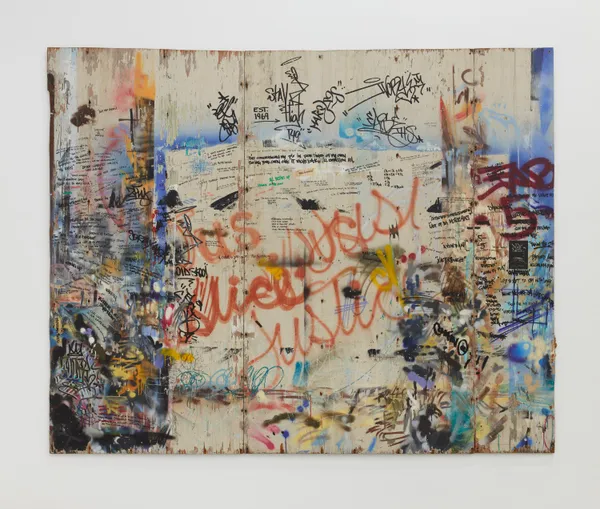
Lee Quiñones (born Ponce, Puerto Rico) is one of the most influential artists to emerge from the New York City subway art movement of the 1970s, painting over a hundred train cars across the MTA system. His transition between the street art scene and mainstream contemporary art spaces bought with it provocative sociopolitical commentary and innovative deployment of the spray paint medium. He has had numerous solo shows and exhibited internationally, beginning with his first gallery presentation at Galleria Medusa in Rome, Italy in 1979 and his first New York show at White Columns in 1980. His works have subsequently been featured in exhibitions at MoMA PS1, Long Island City, New York; Gropius Bau, Berlin, Germany; MFA Boston, Massachusetts; Bronx Museum, New York; Museum of Modern Art, New York; Seoul Museum of Art, South Korea; and Museum of Contemporary Art of Rome, Italy, among others. Quiñones lives and works in Brooklyn, New York.
Onajide Shabaka (born Cincinnati, Ohio) explores our environment and biology, focusing on humans and the ecology that reveal untold or hidden narratives. He studied at California College of the Arts and Art Center College of Design and earned his MFA from Vermont College of Fine Arts. Shabaka has participated in numerous international art residencies, including Diaspora Vibe Cultural Arts Incubator, San Miguel de Allende, Mexico; Anderson Ranch, Aspen, Colorado; Project Row Houses, Houston, Texas; and Everglades (AIRIE), Florida. Exhibitions include shows at Verein Berliner Kunstler, Germany; The Franklin, Chicago, Illinois; Edna Manley College of the Arts in Kingston, Jamaica; Little Haiti Cultural Center; Under the Bridge Art Space, Frost Art Museum, Miami, Florida; and Cindy Rucker Gallery, New York.
william córdova (born Lima, Peru) is interested in the ephemeral visuality of transition and displacement, how objects and perception change and adapt within time and space. Utilizing a variety of materials, including reclaimed objects, paint, gold leaf, and collage, córdova’s multimedia practice weaves encoded statements on contemporary social systems, literary and musical references within the material history of objects and images. córdova graduated with a BFA from The School of the Art Institute of Chicago, earned an MFA from Yale University. He most recently organized Can’t Stop Won’t Stop: Meditations on Resilience (2022) at the LeRoy Neiman Center for Print Studies, which featured three print projects by córdova, Fab 5 Freddy, and Lee Quiñones in dialogue with one another and co-curated The Greenwood Centennial (2021), Tulsa, Oklahoma. His work is currently included in the group exhibition The Culture: The Culture: Hip Hop and Contemporary Art in the 21st Century at the Baltimore Museum of Art, Maryland. Notable solo exhibitions include on the lower frequencies i speak 4 u, at the Baltimore Museum of Art (2022), and his first major survey exhibition, now’s the time: narratives of southern alchemy at the Pérez Art Museum Miami, Florida, in 2018.
-
Works
-












Mailing list sign-up
* denotes required fields
In order to respond to your enquiry, we will process the personal data you have supplied to communicate with you in accordance with our Privacy Policy. You can unsubscribe or change your preferences at any time by clicking the link in our emails.