-
ÜbersichtCanisters, 1997
"I’m fascinated with the stories that we tell. Real histories become fantasies and fairy tales, morality tales and fables. There’s something interesting and funny and perverse about the way fairytale sometimes passes for history, for truth."
New York-based artist Kara Walker is known for her candid investigation of race, gender, sexuality, and violence through silhouetted figures that have appeared in numerous exhibitions worldwide.Born in Stockton, California in 1969, Walker was raised in Atlanta, Georgia from the age of 13. She studied at the Atlanta College of Art (BFA, 1991) and the Rhode Island School of Design (MFA, 1994). She is the recipient of many awards, notably the John D. and Catherine T. MacArthur Foundation Achievement Award in 1997 and the United States Artists Eileen Harris Norton Fellowship in 2008. In 2012, Walker became a member of the American Academy of Arts and Letters. Her work can be found in numerous museums and public collections including Deutsche Bank, Frankfurt, Germany; The Metropolitan Museum of Art, New York; The Museum of Modern Art, New York; the Museo Nazionale delle Arti del XXI Secolo (MAXXI), Rome, Italy; The Solomon R. Guggenheim Museum, New York; and Tate Britain, London, United Kingdom.Walker’s major survey exhibition, Kara Walker: My Complement, My Enemy, My Oppressor, My Love, was organized by The Walker Art Center in Minneapolis where it premiered in February 2007 before traveling to ARC/ Musée d’Art moderne de la Ville de Paris; The Whitney Museum of American Art, New York; The Hammer Museum in Los Angeles; and the Museum of Modern Art, Fort Worth. Recent solo exhibitions have been presented the Art Institute of Chicago; Camden Arts Centre in London; and Metropolitan Arts Center (MAC) in Belfast. -
FEATURED PROJECT

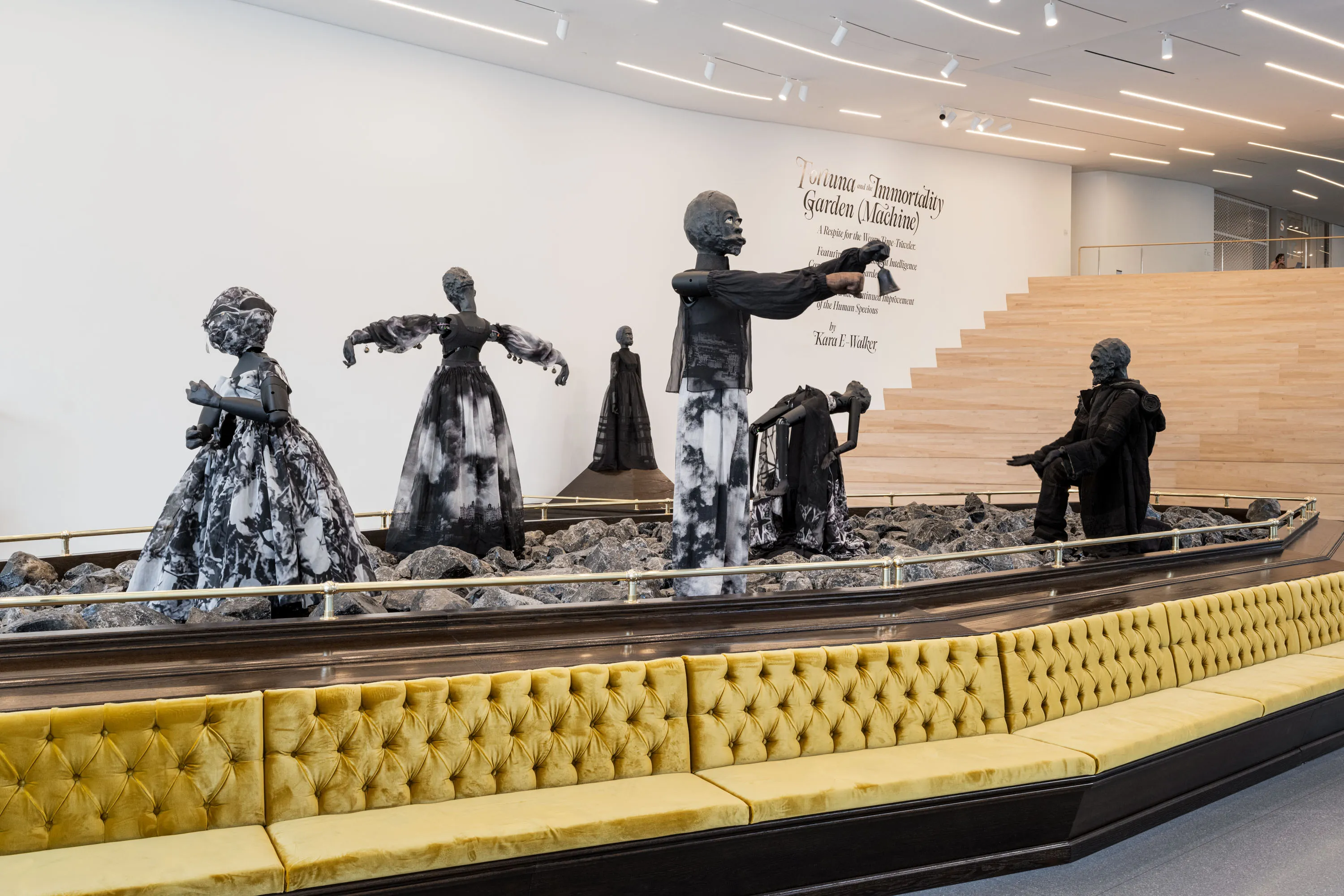
Fortuna and the Immortality Garden (Machine)
San Francisco Museum of Modern Art | July 1, 2024-June 7, 2026Learn MoreInspired by a wide range of sources, from antique dolls to Octavia Butler’s novel Parable of the Sower, Walker’s new commission, Fortuna and the Immortality Garden (Machine), considers the memorialization of trauma, the objectives of technology, and the possibilities of transforming the negative energies that plague contemporary society. Here, automatons trapped in a never-ending cycle of ritual and struggle are repositories of the human soul. They recall mechanized medieval icons that evidenced divinity, vitality, and the promise of faith. Situated within an energetically charged field of black obsidian from Mt. Konocti in Lake County — a volcanic glass with deep spiritual properties — Walker’s Gardeners evoke wonder, reflection, respite, and hope. Just past this prophetic vignette, the installation’s namesake, Fortuna, responds to each visitor with a choreographed gesture and a printed fortune fresh from her mouth — an offering of absolution and contemplation. -
Related Artwork
-
-
-
Featured Artwork
Gone: An Historical Romance of a Civil War as it Occurred b'tween the Dusky Thighs of One Young Negress and Her Heart, 1994
In 1994 Kara Walker made her New York debut when Ann Philbin, then director of The Drawing Center, invited Walker to participate in a group exhibition at the museum. Given a 50 foot length of wall, Walker responded with an installation of black cut-out silhouettes - a tableau populated by antebellum figures in a turbulent scene. Referencing Margaret Mitchell's 1936 novel Gone with the Wind the work is titled, Gone: An Historical Romance of a Civil War as It Occurred b'tween the Dusky Thighs of One Young Negress and Her Heart. The installation is now in the collection of the Museum of Modern Art in New York.Walker continues to employ the silhouette technique, rooted in the Victorian “ladies’ art” of shadow portraits, and has made over 50 wall installations, many of which are in institutional collections worldwide. -
-
Featured Artwork
A Burial at the Artist’s Country Estate, 2022
Kara Walker’s "A Burial at the Artist’s Country Estate" is a monumental ink work on paper depicting an unnerving scene of provincial last rites. Both the title and structure of the work evoke clear parallels to Gustave Courbet’s seminal 1849-50 painting "A Burial at Ornans," with two groups of onlookers positioned on both sides of a center grave. Yet the most striking difference between Courbet’s "Burial" and Walker’s—besides the implication of proprietorship in the title—is the presence of not one, but two figures at the grave. Unlike the empty, open plot of earth at the bottom of Courbet’s painting, the focal point of "A Burial at the Artist’s Country Estate" shows a naked woman midway into a gaping hole in the ground, with another body lying prone nearby. One cannot immediately tell if the central woman is being lowered into the dark opening or pulled from it; her arms are outstretched above her head, holding a shovel in one hand while the other is gripped at the wrist by a ghostly two-faced figure standing by the grave. Only the despair on her face is clearly legible, suspended between submersion and ascension.
Though not overtly auto-biographical, Walker’s anachronistic crowd contains several references to members of her own cotton-farming family from Georgia. The subjects depicted include her father, as a child, drawing in the dirt; her Baptist minister uncle, seated in a wheelchair and raising a finger; a Bible-clasping aunt; and a hooded woman carrying an infant on her back, roaming through a field of cotton. The tension between flight and imprisonment pervades the drawing's composition, with the dug-out grave functioning as both an escape hatch and site of entombment for the fallen body. The presence of the astronaut, evoking Afro-Futuristic imagery, similarly suggests a possibility of liberation—an unboundedness to gravity and past and present subjugation. The onlookers’ reactions towards the central scene are varied, with some turned away and others gazing on solemnly. Altogether, their function as guests on the “artist’s country estate”—bearing suspicious resemblance to the artist's own house in the country—remains ambivalent; rather, their presence as witness to the violence of burial against any conceivable freedom recasts this art historical tableau within Walker’s own visual mythology, and the force of its history as contemporaneous and consuming.
-
Ausstellungen
-
Kara Walker
The High and Soft Laughter of the Nigger Wenches at Night, In the Colorless Light of Day 10.25 – 12.21.24Sikkema Jenkins & Co. and Kara Walker are pleased to present The High and Soft Laughter of the Nigger Wenches at Night, in the Colorless Light of Day . This...Explore -
Kara Walker
Prince McVeigh and the Turner Blasphemies & The Book of Hours 10.29 – 12.18.21Sikkema Jenkins & Co. is pleased to present a solo exhibition of work by Kara Walker, featuring the narrative film Prince McVeigh and the Turner Blasphemies , and a selection...Explore -
UN-FAIR
william cordova, Zipora Fried, Sheila Hicks, Cameron Martin, Vik Muniz, Kay Rosen, Erin Shirreff, Kara Walker 02.02 – 03.06.21william cordova (b. 1961, Lima, Peru), is interested in the ephemeral visuality of transition and displacement, how objects and perception change and adapt within time and space. Utilizing material such...Explore
-
-
Publikationen
-
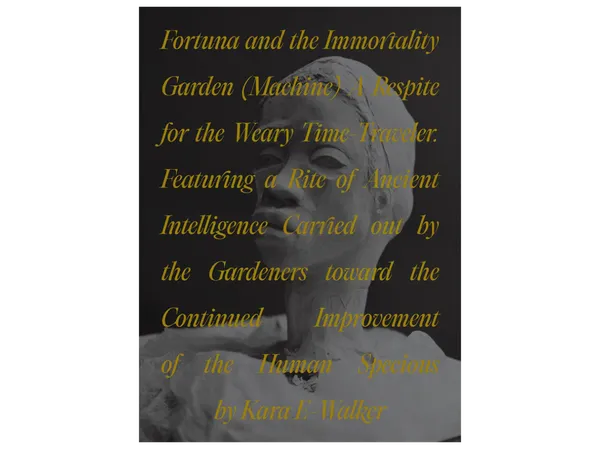
Fortuna and the Immortality Garden Machine
Kara Walker, 2024Softcover, 130 pagesWeiterlesen
Publisher: San Francisco Museum of Modern Art | Princeton University Press
Dimensions: 1.5 x 8.5 in. -
Kara Walker
Figa 2019Hardcover, 88 pagesWeiterlesen
Publisher: DESTE Foundation for Contemporary Art
Dimensions: 6.5 x 9.5 in. -
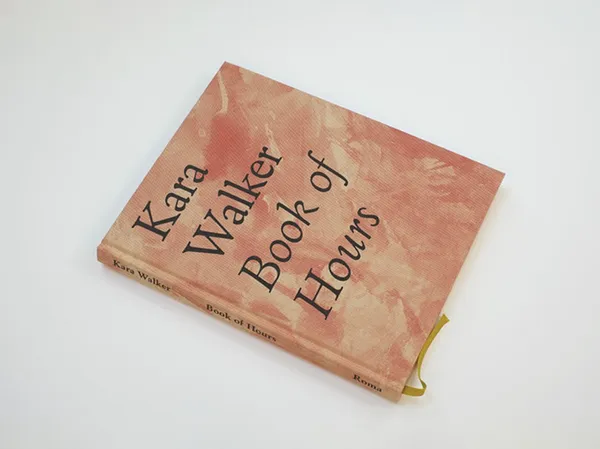
Kara Walker: Book of Hours
Kara Walker, 2022Hardcover, 144 pagesWeiterlesen
Publisher: Roma Publications
Dimensions: 8.25 x 10.25 in. -
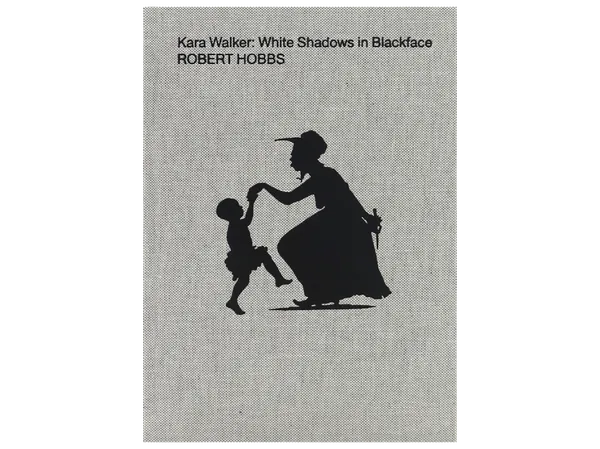
Kara Walker: White Shadows in Blackface
Robert Hobbs, 2023Hardcover, 176 pagesWeiterlesen
Publisher: Karma Books
Dimensions: 6.5 x 9.25 in. -
October Files
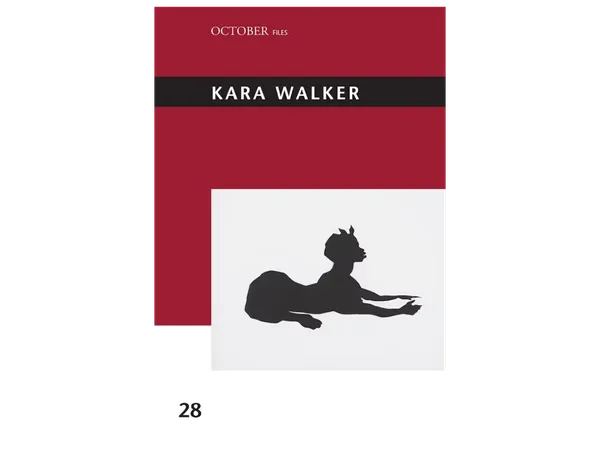
Kara Walker 2022Softcover, 264 pagesWeiterlesen
Publisher: MIT Press
Dimensions: 6 x 9 in.
-







Mailing list sign-up
* denotes required fields
In order to respond to your enquiry, we will process the personal data you have supplied to communicate with you in accordance with our Privacy Policy. You can unsubscribe or change your preferences at any time by clicking the link in our emails.